Weight-specific cooking guide
How long to cook an 8-pound pork shoulder in a slow cooker
Plan on roughly 10–12 hours on LOW or 6–8 hours on HIGH, but let tenderness and internal temperature—not the clock alone—decide when it is done.
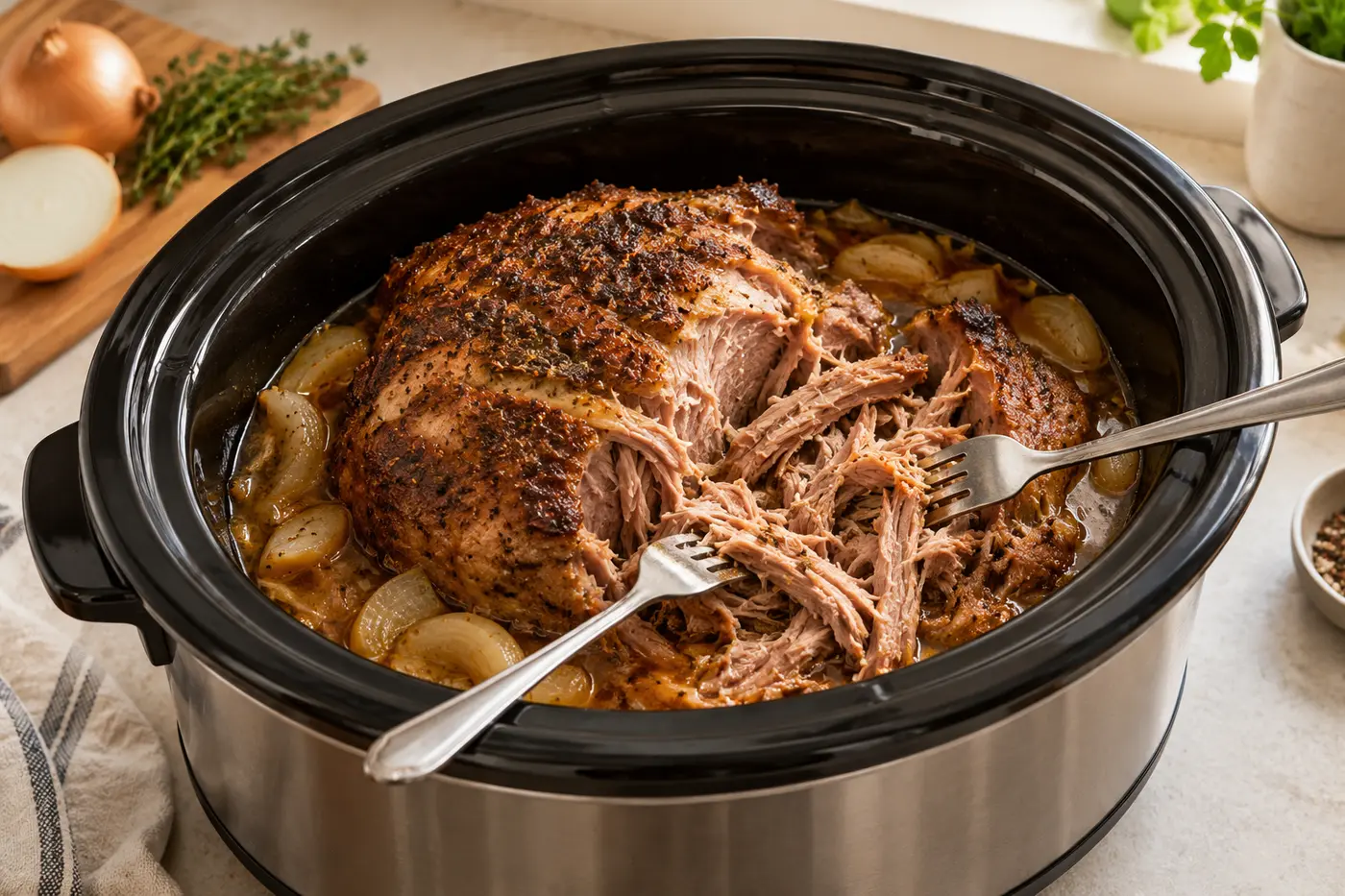
An 8-pound pork shoulder can make a generous batch of pulled pork, but its exact cooking time depends on the roast's shape, whether it contains a bone, the starting temperature, the amount of liquid, and how hot your slow cooker actually runs. Build in extra time: a finished roast can rest or hold warm more easily than an undercooked one can be rushed.
Quick answer
For a fully thawed 8-pound pork shoulder, begin checking after about 10 hours on LOW or 6 hours on HIGH. Many roasts need 10–12 hours on LOW or 6–8 hours on HIGH to become fork-tender. A compact, bone-in shoulder can take longer than a flatter boneless roast. Opening the lid repeatedly also extends the cook.
Make sure the roast fits safely
A 7- to 8-quart oval slow cooker is generally the practical starting size for an 8-pound shoulder, but crock dimensions vary. The roast should sit below the rim with the lid fully closed and without food pressing tightly against the lid. Do not force an oversized roast into a smaller cooker.
If it does not fit comfortably, divide the shoulder into two or three large pieces with a clean, sturdy knife, cook it in two slow cookers, or choose another cooking method. Cutting it into several large pieces can shorten the cooking time, so begin temperature and tenderness checks earlier.
Step-by-step method
- Thaw completely in the refrigerator. Do not put a frozen 8-pound roast into the slow cooker. A large shoulder may need several days to thaw; allow enough time rather than thawing it on the counter.
- Trim, but do not strip it bare. Remove loose or very thick exterior fat while leaving some fat for moisture and flavor. Pat the pork dry and season all sides.
- Add modest liquid. Start with about ½–1 cup of broth, water, apple juice, or sauce unless your recipe specifies otherwise. Pork releases liquid as it cooks; it does not need to be submerged.
- Cook with the lid closed. Use LOW for the most forgiving all-day schedule or HIGH when time is shorter. Avoid lifting the lid just to look.
- Check the thickest areas. Insert an instant-read thermometer away from the bone. Check more than one spot because a large roast does not heat uniformly.
- Test tenderness. At roughly 195°F, twist a fork or slide in a probe. If the meat still resists, cover it and continue in 30–45 minute increments.
- Rest and shred. Move the pork to a rimmed pan and rest it for 20–30 minutes. Remove bone and large fat pockets, shred the meat, then moisten it with strained cooking juices or sauce.
Why is it safe but still tough?
Safety and tenderness are different. At 145°F with the required rest, a whole pork roast has reached the federal safety minimum, but shoulder contains abundant connective tissue. It needs more time at a higher finishing temperature for that collagen to soften. If the roast is above 145°F yet will not pull apart, it generally needs continued cooking—not aggressive shredding.
Should you cook it overnight?
Only use a slow cooker in good working order on a heat-safe, uncluttered surface, following its manufacturer's directions. Start with thawed meat, do not use a delayed-start timer, and make sure the lid seats correctly. If you are uncomfortable leaving an appliance operating while asleep or away, choose a daytime schedule.
How much pulled pork will it make?
Yield varies with the bone and fat cap, but an 8-pound shoulder often gives roughly 4½–5½ pounds of cooked, trimmed meat. At ⅓ pound per sandwich or plate, that is about 14–16 generous servings; smaller sandwiches can stretch it further.
Holding, cooling, and leftovers
If serving soon, keep the pork at 140°F or hotter. Refrigerate leftovers in shallow containers within two hours, or within one hour when the surrounding temperature is above 90°F. Use refrigerated cooked pork within 3–4 days and reheat leftovers to 165°F. Freeze portions you will not use in that window.
Common timing problems
Use the leftovers
Portion the pork for sandwiches, tacos, baked potatoes, nachos, omelets, or freezer meals. For shredding options, see our guide to simple shredding methods; the hand and fork techniques work just as well for tender pork.
Food-safety basis: Safe minimum temperature guidance follows the USDA safe-temperature chart. Thawing and slow-cooker practices follow FoodSafety.gov slow-cooker guidance; cooling and reheating guidance follows the USDA leftovers guide.