Practical nutrition
Calorie awareness and balanced nutrition: a simple guide
Counting calories can reveal patterns, but calories are only one part of nourishment. Use them alongside food quality, portions, hunger, health needs, and daily movement—not as a score of whether you ate “good” or “bad.”
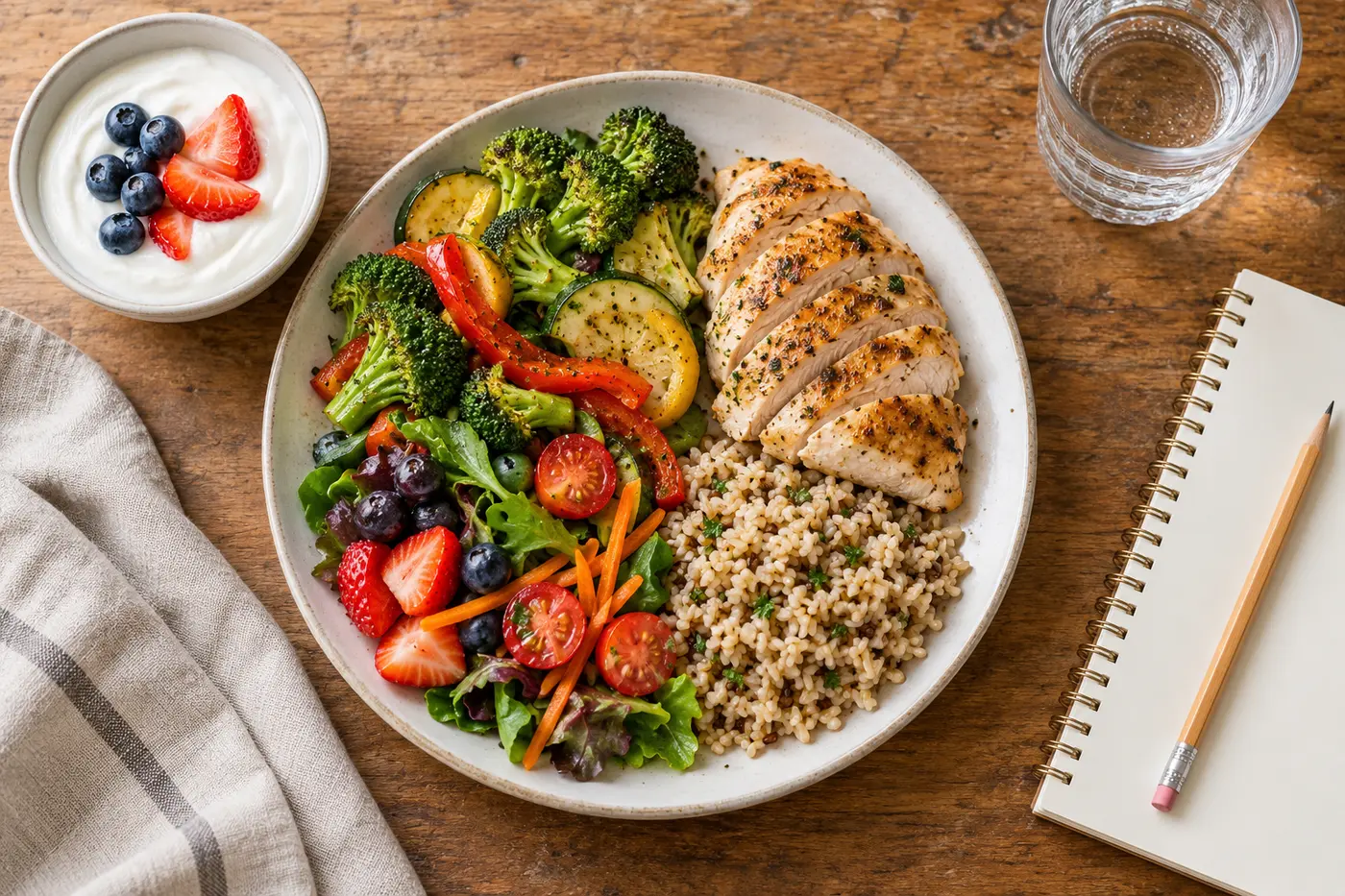
A food log can make invisible habits visible. It may show that drinks, sauces, large servings, frequent tastes while cooking, or low-fiber meals are contributing more energy—or less nourishment—than expected. Used calmly and temporarily, calorie tracking can be a learning tool rather than a lifelong obligation.
What counting calories can—and cannot—do
Body weight is influenced by energy balance over time. When a person consistently uses more energy than they consume, weight generally trends downward. Tracking can help estimate intake, compare portions, and identify manageable changes. It can also help someone notice whether a “healthy” food is especially calorie-dense or whether a low-calorie meal is missing protein, fiber, or enough food to be satisfying.
Calorie counts are estimates, however. Portions differ, recipes vary, restaurant information is approximate, and energy needs change. Two meals with the same calories can also provide very different amounts of protein, fiber, vitamins, minerals, sodium, saturated fat, and added sugar. Use the number as information—not as the only measure of a meal.
A simple visual for building a meal
This plate is a practical starting picture, not a rule for every body or every meal. Breakfasts, soups, casseroles, sandwiches, cultural foods, and slow-cooker meals may not separate neatly. Think about the ingredients across the whole meal—or even the whole day.
Use the Nutrition Facts label efficiently
- Start with serving size. All numbers on the label refer to that amount. If you eat two servings, calories and nutrients generally double.
- Check calories in context. Ask whether the serving is realistic and whether it provides enough protein, fiber, and volume to satisfy you.
- Use % Daily Value as a shortcut. The FDA says 5% Daily Value or less is low and 20% or more is high for a nutrient in one serving.
- Look for helpful nutrients. Dietary fiber, vitamin D, calcium, iron, and potassium are useful label checkpoints.
- Notice nutrients commonly limited. Compare saturated fat, sodium, and added sugars—especially in foods eaten often.
Daily Values on labels are general reference amounts, not a personalized diagnosis. “High” or “low” describes one serving of one food; the overall pattern still matters.
A seven-day nutrition check
Instead of judging one meal, record an ordinary week. Include portions, beverages, cooking oils, dressings, sauces, snacks, and condiments. Then look for repeated patterns:
| If your week often shows… | You might be missing or overdoing… | A practical change to try |
|---|---|---|
| Few vegetables, fruits, beans, or whole grains | Fiber, potassium, and variety | Add one produce item to two meals a day; swap one refined grain for a whole-grain option. |
| Meals that leave you hungry soon afterward | Protein, fiber, food volume, or enough total food | Build meals around a protein source plus vegetables or fruit and a fiber-rich carbohydrate. |
| Frequent sugary drinks or sweetened coffee | Added sugar and calories that may not satisfy hunger | Reduce the size or frequency, dilute gradually, or alternate with water or unsweetened drinks. |
| Many packaged, cured, or restaurant foods | Sodium may be high | Compare labels, use lower-sodium staples, and balance convenience foods with minimally processed ingredients. |
| Very little dairy, fortified alternatives, fish, eggs, or varied proteins | Possible gaps depend on the foods omitted | Add appropriate alternatives and discuss persistent concerns or restrictive diets with a registered dietitian. |
| Calories regularly exceed your goal | Large portions, calorie-dense extras, or liquid calories | Change one repeat habit first—such as the drink, serving size, oil, or sauce—rather than cutting everything at once. |
Food records cannot diagnose a deficiency. Symptoms such as fatigue, weakness, hair loss, dizziness, or numbness have many possible causes. A clinician may use health history and laboratory testing to determine whether a deficiency or another condition is present.
Using awareness for gradual weight loss
Weight loss does not require a “perfect” menu. It usually requires a sustainable eating pattern that creates an energy deficit over time. Because needs vary widely, this article does not assign one daily calorie target. The NIH Body Weight Planner can estimate how calorie intake and activity changes may affect an adult’s weight over time, while a clinician can account for medical conditions and medications.
Changes that are often easier to maintain include measuring calorie-dense oils and sauces, replacing some refined or highly processed foods with higher-fiber foods, choosing leaner proteins more often, reducing sugar-sweetened drinks, planning satisfying portions before eating, and cooking enough balanced food for leftovers. Keep changes modest enough that you can repeat them.
Diet and daily activity work together
A healthy eating pattern and regular movement support one another. Physical activity uses energy, helps preserve function, supports heart and metabolic health, and can help with weight maintenance. The CDC recommends that most adults work toward at least 150 minutes of moderate-intensity aerobic activity each week, plus muscle-strengthening activity on two days. Some movement is better than none, and people with medical limitations should choose activity with professional guidance.
Exercise does not erase a meal, and food is not something that must be “earned.” A healthier lifestyle is the combined pattern: nourishing food, appropriate portions, regular activity, adequate sleep, stress management, and medical care when needed.
A simple starting plan
- Track your usual food and drinks for seven days without trying to make the record look perfect.
- Compare serving sizes and use the 5%/20% Daily Value shortcut.
- Choose one likely gap to add—often vegetables, fruit, fiber-rich carbohydrates, or a suitable protein.
- Choose one repeated source of excess calories to reduce slightly.
- Add a realistic daily activity habit, such as a walk, and build gradually.
- Review how your energy, hunger, sleep, digestion, and weight trend—not just one day’s number.
For more meal-planning context, see our lean beef and chicken nutrition comparison and browse slow-cooker recipes that can be paired with vegetables, fruit, and whole-grain or starchy sides.