Slow-cooker food safety
Can you put frozen meat in a slow cooker?
Thaw it first. USDA advises always thawing meat and poultry before placing it in a slow cooker because frozen food takes longer to reach a safe internal temperature.
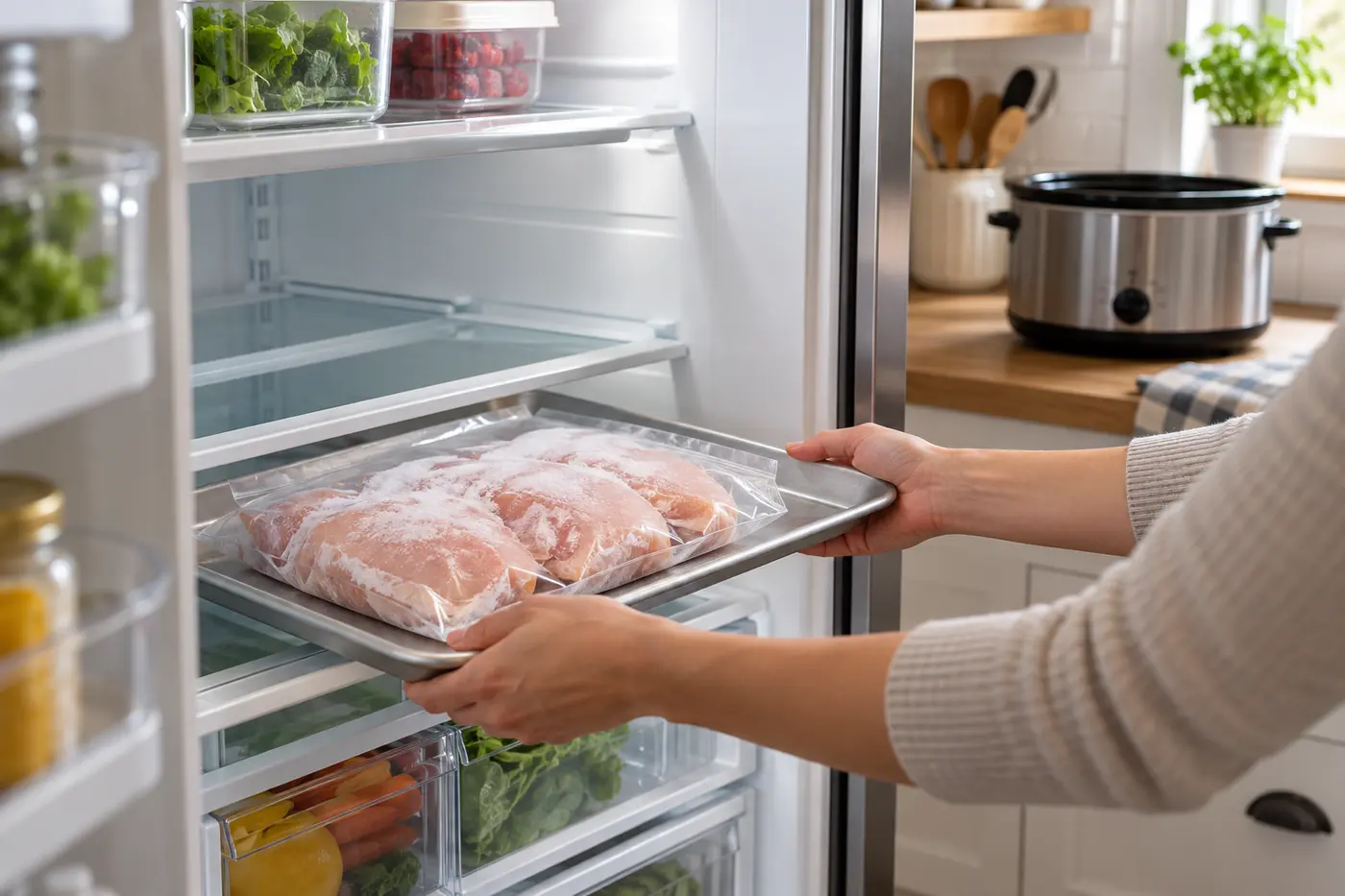
Putting a solidly frozen roast, frozen chicken pieces, or a frozen block of ground meat directly into a slow cooker may feel convenient, but it is not the safe shortcut. The cooker warms gradually, and the frozen center delays the entire meal from heating as intended.
Why frozen meat is a problem in a slow cooker
Slow cookers generally operate at low temperatures and need time to heat the food and generate steam under the lid. A frozen piece takes longer to warm, and it can cool the other ingredients around it. That creates a less predictable early cooking period, when time and temperature matter most.
Adding extra hours does not correct the uncertainty at the beginning of the cook. The finished center might eventually reach a safe temperature, but a final thermometer reading cannot show how slowly the food warmed earlier.
Three safe ways to thaw meat
If dinner is still frozen
- Change the menu. Use a fully thawed protein, canned beans, or another meal that is ready to cook safely.
- Use a faster safe thaw. Cold-water thawing works well when you have a few hours; microwave thawing is the quickest option when you can cook immediately.
- Choose another cooking appliance. USDA notes that some meat and poultry can be cooked from frozen in an oven or on a stovetop, usually with a longer cooking time. Follow a tested method appropriate for the cut—this does not make the slow cooker suitable for frozen meat.
What about small frozen pieces?
The advice does not change just because the pieces are small. Frozen chicken breasts, thighs, drumsticks, stew meat, meatballs, and a frozen block of ground meat should be thawed before slow cooking unless a commercially prepared product gives specific from-frozen slow-cooker directions.
What if the meat is only partly frozen?
If the middle is stiff, icy, or difficult to separate, finish thawing it before starting the slow cooker. Do not rely on the HIGH setting to make partially frozen meat equivalent to thawed meat.
Safe internal temperatures
Use a food thermometer in the thickest part, away from bone. Check more than one piece when sizes vary.
- Poultry: 165°F.
- Ground beef, pork, veal, and lamb: 160°F.
- Whole cuts of beef, pork, veal, and lamb: 145°F followed by a 3-minute rest. Tough slow-cooker cuts often need additional cooking beyond the safety minimum to become tender.
- Leftovers: Reheat to 165°F using the stove, microwave, or oven before transferring to a preheated slow cooker for hot holding.
A simple night-before routine
- Move the frozen package from the freezer to a rimmed tray in the refrigerator.
- Prepare vegetables separately and refrigerate them in a covered container.
- In the morning, confirm the meat is thawed, load the cooker, add the recipe's liquid, and start cooking immediately.
- Keep the lid closed as much as possible and verify doneness with a thermometer.
For a large roast, plan more than one night ahead. Our 8-pound pork shoulder guide explains cooker fit, timing, safety, and the difference between a safe temperature and pull-apart tenderness.
Food-safety basis: USDA's Slow Cookers and Food Safety guidance says to thaw meat and poultry before slow cooking. Safe thawing methods follow USDA's Big Thaw guide. Final temperatures follow the USDA safe-temperature chart.