Slow-cooker troubleshooting
How to Prevent and Fix Watery Slow-Cooker Meals
Why extra liquid collects under the lid—and how to correct thin soup, stew, sauce, or gravy without guessing.
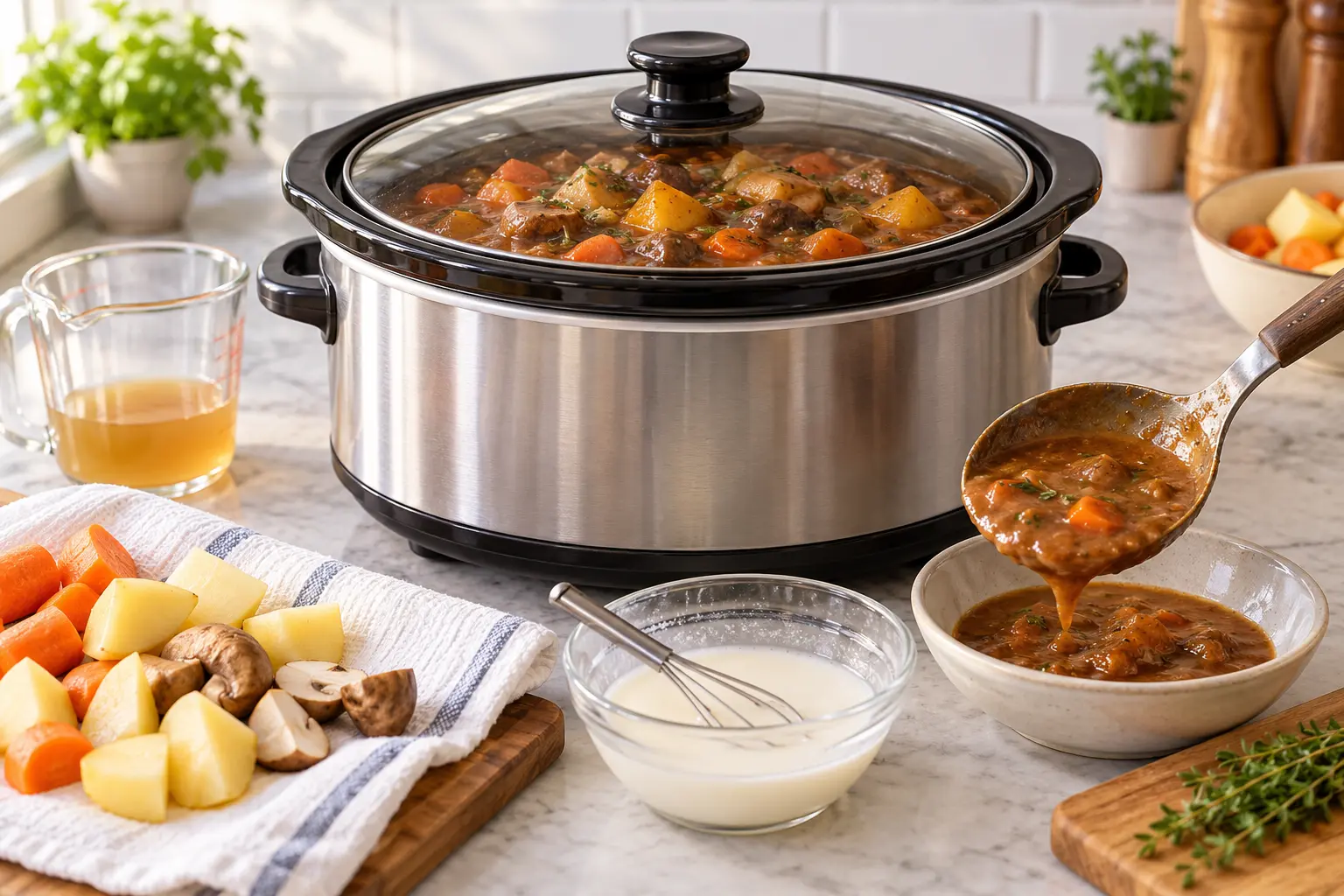
Slow cookers lose much less moisture than an uncovered pot. Steam rises, condenses on the lid, and falls back into the food. Meat, onions, mushrooms, zucchini, tomatoes, and frozen ingredients release additional water as they cook. A stovetop recipe transferred without adjustment can therefore finish much thinner than expected.
Prevent excess liquid before cooking
- Start with the slow-cooker recipe’s amount of liquid. Do not automatically add enough broth to cover meat and vegetables. If converting a stovetop recipe, begin conservatively; the exact reduction depends on the dish and cooker.
- Drain wet ingredients. Drain canned beans and vegetables when the recipe calls for it, and pat washed produce dry. Count canned tomatoes and their juice as liquid.
- Thaw meat and poultry first. USDA advises thawing them before slow cooking. Frozen food adds meltwater and can delay safe heating. Commercial frozen slow-cooker meals are an exception only when prepared according to their package directions.
- Use the correct cooker size. Follow the manufacturer’s fill range. An overfilled cooker heats less predictably, while a very thin layer can cook faster than expected.
- Keep the lid closed while cooking. Lifting it releases heat and extends the cook. Plan thickening for the end rather than repeatedly checking.
- Add dairy and quick-cooking ingredients late. Milk, cream, tender vegetables, and cooked pasta usually need only the finishing stage; adding them early can hurt texture and change the liquid balance.
For a naturally saucy recipe with a deliberate thick finish, compare the method in slow-cooker BBQ chicken.
Four ways to fix a watery finish
1. Reduce the liquid in a saucepan
For the fastest flavor-concentrating fix, transfer excess liquid to a wide saucepan, bring it to a boil, and simmer until reduced. Return it to the cooker and stir. Keep the solid food covered and hot while the liquid reduces; if holding cooked food, verify it remains at least 140°F. Handle the hot crock and steam carefully.
2. Use a cornstarch slurry
Start with 1 tablespoon cornstarch mixed with 1 tablespoon cold water for each cup of thin liquid you want to thicken. Whisk until smooth, stir in gradually, cover, and cook on High for 10–20 minutes. Check before adding more: starch reaches full thickness after heating. Never sprinkle dry cornstarch or flour directly into the cooker, where it can clump.
3. Mash or blend part of the dish
Mash a few cooked potatoes, beans, squash pieces, or lentils against the side and stir them back in. For soup, carefully blend a small portion and return it. This adds body without changing the flavor much. Do not blend meat, bones, or bay leaves.
4. Use an ingredient that belongs in the meal
A spoonful at a time of instant potato flakes can thicken a compatible stew. Tomato paste can add body to tomato-based sauces. Cooked rice, pasta, or grains absorb liquid, but add them only when they suit the dish and account for how much they will swell.
Should you remove the lid?
Some slow-cooker manuals permit cooking uncovered for a short finishing period, but appliance instructions differ. Check your manual first. If allowed, uncover only while you are present, switch to High, stir periodically, and expect 20–30 minutes rather than rapid stovetop evaporation. A saucepan is usually faster and more predictable.
Avoid these common fixes
- Do not drain all the flavorful liquid before trying a measured thickener or reduction.
- Do not add uncooked flour directly; it can form lumps and retain a raw taste.
- Do not overfill the cooker with pasta, rice, or starch just to absorb broth.
- Do not use Warm to finish cooking or activate a thickener. Warm is for holding already-hot food.
- Do not leave the lid off unattended or ignore the appliance manufacturer’s instructions.
Food-safety checkpoints
Thaw meat or poultry before slow cooking. Cook foods to their applicable safe minimum internal temperature, measured with a food thermometer. If holding a finished meal, keep it at 140°F or above. Refrigerate leftovers in shallow containers within two hours—one hour when the surrounding temperature is above 90°F—and reheat leftovers rapidly to 165°F on the stove, in the microwave, or in the oven.
For more detail, see why frozen meat should be thawed first and the complete leftovers guide.
Sources and review date
Checked October 19, 2026: USDA: Slow Cookers and Food Safety, USDA: Is it safe to cook frozen foods in a slow cooker?, and USDA: Leftovers and Food Safety.