Practical nutrition
Lean beef vs. chicken: choosing for your dietary needs
Both can be valuable, protein-rich foods. The useful question is not which one “wins,” but which nutrient profile, cut, portion, and preparation best fit the rest of your diet.
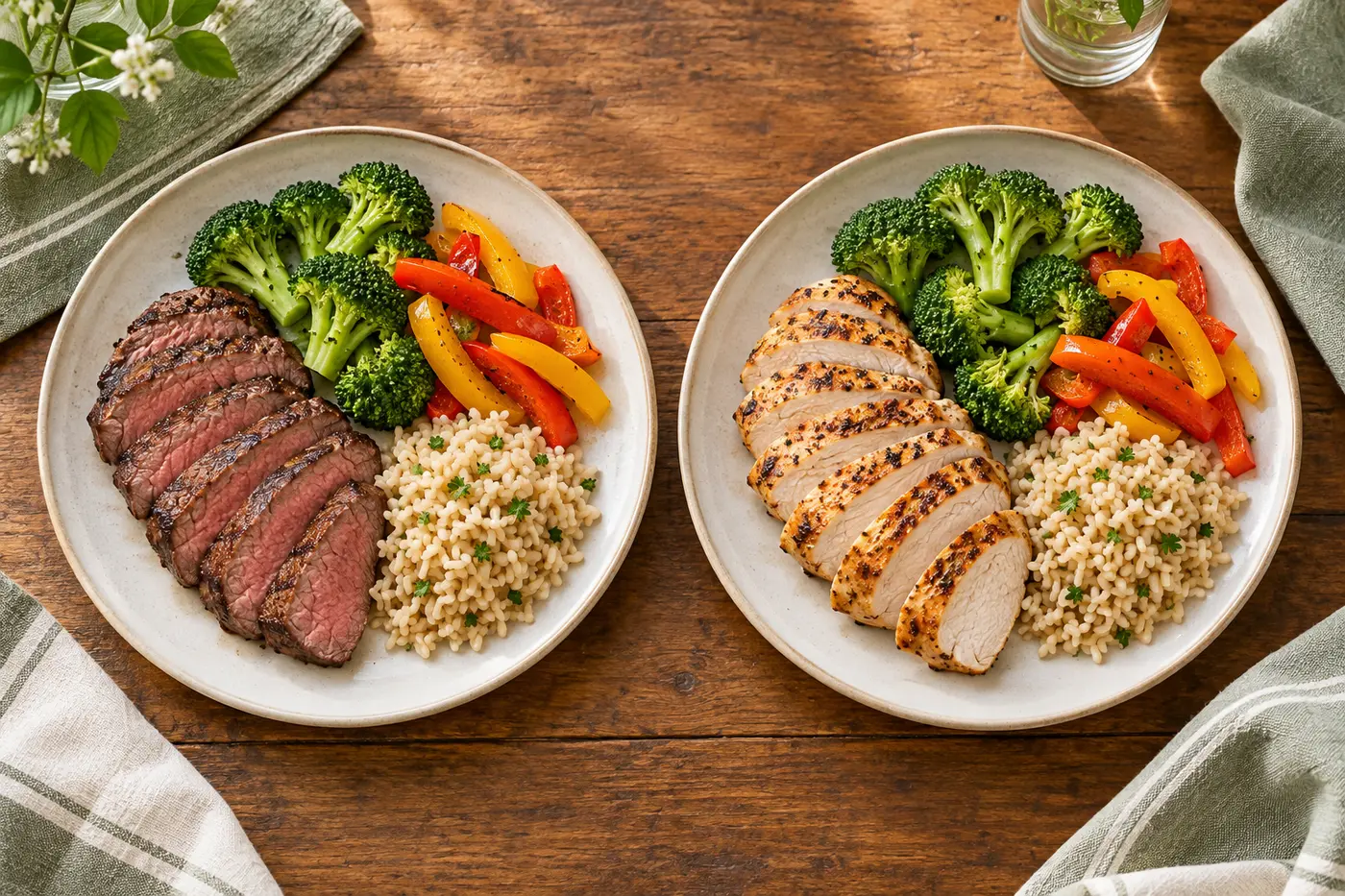
“Beef versus chicken” is often framed as a competition. That framing hides the practical answer: nutrition changes with the cut, visible fat, skin, processing, cooking method, portion, and the foods served alongside it. A trimmed sirloin is not nutritionally equivalent to a heavily marbled ribeye, and skinless chicken breast is not equivalent to fried chicken with skin.
What this comparison measures
For a useful like-for-like comparison, the table uses a 3-ounce cooked portion: roughly the amount in a modest serving after cooking. The beef column represents typical USDA values across lean choices such as trimmed sirloin or 93%-lean ground beef; the chicken column represents roasted, skinless breast meat. Values are rounded ranges because exact cuts and cooking losses vary.
| Nutrient per 3 oz cooked | Lean beef, typical range | Skinless chicken breast, typical range | Practical meaning |
|---|---|---|---|
| Calories | About 170–200 | About 140–150 | Chicken breast is usually less calorie-dense; the cut matters greatly for beef. |
| Protein | About 23–26 g | About 26–27 g | Both provide substantial complete protein in a modest portion. |
| Total fat | About 7–10 g | About 3–4 g | Skinless breast is typically leaner; careful trimming narrows the difference. |
| Saturated fat | About 3–4 g | About 1 g | Chicken breast may fit more easily when saturated fat is being limited. |
| Iron | About 2–3 mg | About 0.8–1 mg | Lean beef generally contributes more heme iron. |
| Zinc | About 4–6 mg | About 0.8–1 mg | Lean beef generally supplies considerably more zinc. |
| Vitamin B12 | About 2–3 mcg | About 0.2–0.4 mcg | Lean beef is typically the stronger B12 source. |
| Niacin and vitamin B6 | Good source | Especially strong source | Chicken breast is notably rich in niacin and vitamin B6; beef contributes both. |
| Selenium | Meaningful source | Meaningful source | Both contribute selenium; amounts vary with the food and production conditions. |
Illustrative ranges are calculated from USDA FoodData Central entries for cooked lean beef selections and roasted chicken breast. They are not a label for every product. Packaged meats should be compared using their Nutrition Facts panels.
Where lean beef may fit especially well
Lean beef's clearest nutritional strengths are iron, zinc, and vitamin B12. Meat contains heme iron, which is generally absorbed more efficiently than nonheme iron from plant foods. Zinc supports many normal body processes, and vitamin B12 is naturally present in animal foods and is necessary for healthy blood and nerve function.
This profile may be useful when a person is trying to obtain more of these nutrients from food. However, fatigue or suspected anemia should not be self-diagnosed as an iron problem. Iron deficiency, B12 deficiency, blood loss, medication effects, and other conditions can overlap in symptoms. Laboratory testing and a qualified clinician can identify the cause and advise whether food changes, supplements, or treatment are appropriate.
Where chicken breast may fit especially well
Skinless chicken breast provides a little more protein for fewer calories in a typical equal-weight comparison and usually contains less total and saturated fat. It is also especially useful for niacin and vitamin B6, while providing selenium and other nutrients. This combination can suit people seeking a lean, protein-dense centerpiece that leaves more room in a meal for olive oil, avocado, nuts, dairy, or other energy sources.
Chicken is not automatically low-fat: thighs, wings, skin, breading, frying oil, cream sauces, and large portions can change the final meal substantially. Likewise, lean beef prepared without excess added fat can be quite different from fattier or highly processed beef products.
Choose according to the need
What “high quality” should mean here
For nutrition comparison, “high quality” should mean fresh or properly frozen meat, handled safely, appropriately lean for your goal, and minimally processed unless a processed product is intentional. Marketing terms alone do not tell you the calories, saturated fat, sodium, or micronutrient content. Read the label and identify the exact cut or lean percentage.
Useful lean beef choices include trimmed round, sirloin, tenderloin, and ground beef labeled 90% lean or higher. For chicken, removing the skin and choosing breast meat lowers fat most predictably. Chicken thighs remain nutritious but contain more fat than breast meat, so they belong in a separate comparison.
The rest of the plate matters
Neither meat provides fiber, and neither should be expected to supply every nutrient. Add vegetables, beans, fruit, and whole grains as appropriate to provide fiber, potassium, vitamin C, folate, and a wider variety of plant compounds. Vitamin C-rich foods such as bell peppers, tomatoes, broccoli, or citrus can improve absorption of nonheme iron from beans and vegetables served in the same meal.
Special health considerations
People managing kidney disease, heart disease, diabetes, gout, food allergies, swallowing problems, pregnancy-related needs, or a diagnosed nutrient deficiency may need individualized advice about portions, protein, sodium, potassium, phosphorus, iron, or supplementation. A registered dietitian or other qualified clinician can tailor the choice to laboratory results, medications, total dietary pattern, and treatment goals.
Related slow-cooker meals
Put either protein to work with our garlic-herb chicken, chicken tacos, mushroom and gravy sirloin, or beef stroganoff. Recipe sauces and side dishes change the full meal's nutrition, so consider them along with the meat.