Kitchen food safety
How often should you wash your hands while cooking?
Wash before you begin and again whenever your hands may have picked up germs. In a busy recipe, that can mean several washes—not because a timer went off, but because you moved from a contaminated task to a clean one.
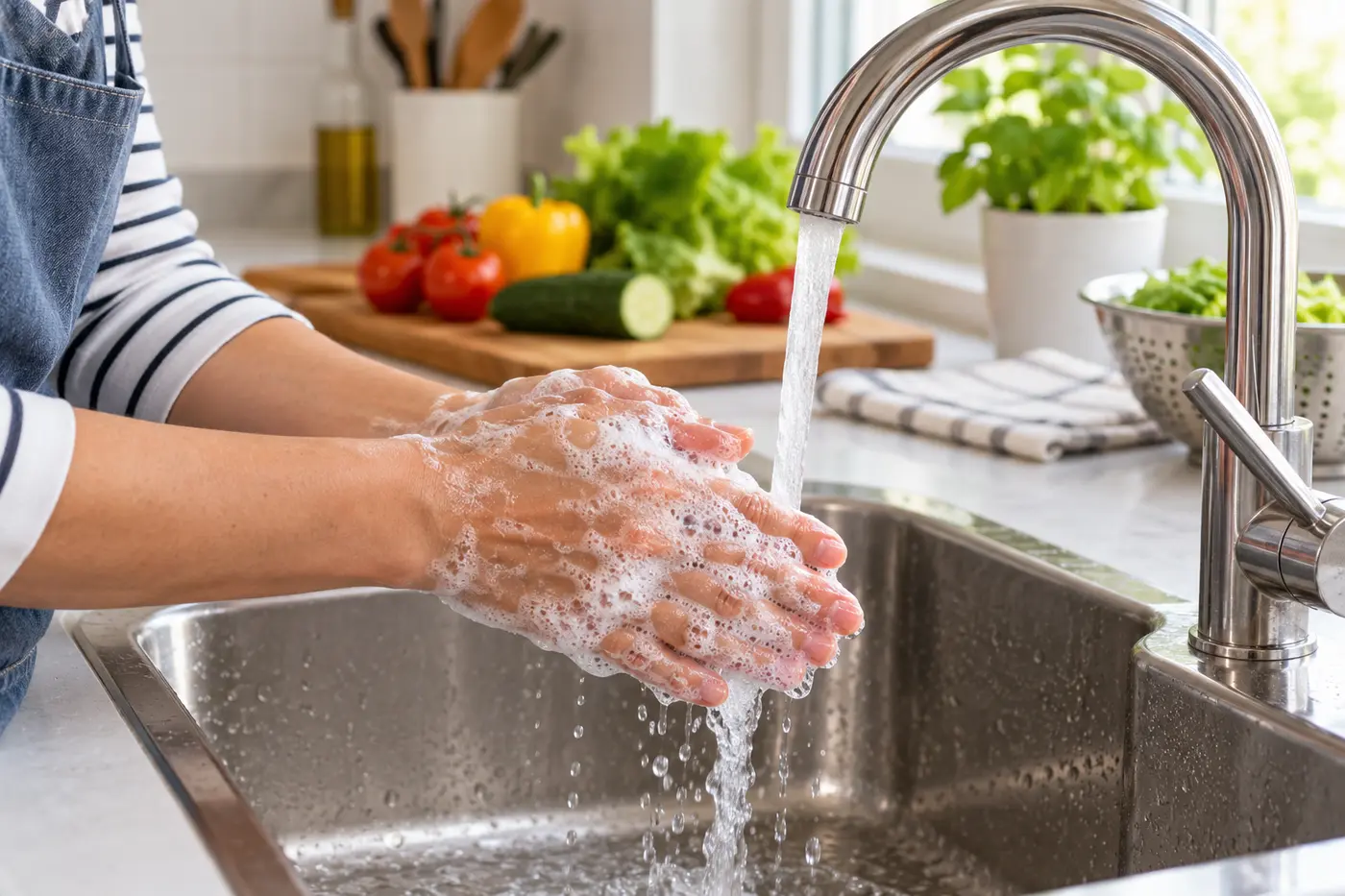
Clean-looking hands are not necessarily clean. Germs are too small to see, and hands can collect them from raw meat, eggs, garbage, phones, pets, towels, sink handles, faces, and many other surfaces. When those hands touch food that will not receive another cooking step, the germs may reach the plate with it.
When to wash your hands while cooking
A useful rule is to wash whenever you change from a potentially contaminated activity to a clean food-preparation task. Wash your hands:
- Before starting: even if your hands look clean.
- Before touching ready-to-eat food: including salads, bread, garnishes, cooked food, and food being plated.
- Before eating or serving: especially after finishing cleanup or handling serving dishes.
- Before and after caring for a cut: cover it securely before returning to food preparation.
- After handling raw meat, poultry, seafood, or eggs: wash before touching spice containers, refrigerator handles, vegetables, utensils, or cooked food.
- After touching packaging or a plate that held raw animal food: juices on a tray or wrapper can contaminate hands.
- After using the bathroom, changing a diaper, or helping someone with toileting.
- After coughing, sneezing, blowing your nose, eating, drinking, smoking, or touching your mouth, face, hair, or body.
- After touching a phone, tablet, remote, doorknob, money, pet, pet food, or pet bowl.
- After taking out garbage, wiping spills, handling dirty dishes, or using cleaning chemicals.
- After removing disposable gloves: gloves can have holes, and hands can be contaminated while the gloves are removed.
That may sound frequent, but good preparation reduces unnecessary trips. Set out measured ingredients and clean utensils before opening raw meat, then complete raw-food tasks together. This helps you avoid touching cabinets and containers with contaminated hands.
The proper handwashing procedure
- Wet your hands with clean, running water. Warm or cold water can be used.
- Apply soap and rub your hands together to create a thorough lather.
- Scrub for at least 20 seconds. Clean the palms, backs of the hands, between every finger, around the thumbs, fingertips, wrists, and beneath the fingernails.
- Rinse well under clean, running water so loosened dirt, soap, and germs flow away.
- Dry completely with a clean towel, disposable paper towel, or air dryer. Avoid wiping clean hands on an apron or damp communal dish towel.
The 20 seconds applies to scrubbing—not the entire time the faucet is running. Singing or humming “Happy Birthday” twice is a familiar way to estimate the time, but a kitchen timer or mental count works too.
Why soap, friction, and drying all matter
Water alone does not remove germs as effectively as a proper wash. Soap and friction loosen grease, dirt, microbes, and some chemicals from the skin; running water carries them away. Fingertips, thumbs, spaces between fingers, and the area under fingernails are easy to miss. Drying also matters because germs transfer more easily to and from wet hands than dry ones.
Antibacterial soap is not necessary for routine home cooking. Ordinary soap and correct technique are the important parts. Very hot water is not required and can irritate the skin, which may make frequent washing harder to maintain.
How dirty hands cause cross-contamination
Cross-contamination is the transfer of harmful microorganisms or other contaminants from one person, food, object, or surface to another. Hands often become the bridge. For example:
- You place raw chicken in a slow cooker.
- Without washing, you pick up the pepper grinder and open the refrigerator.
- Later, clean hands touch those contaminated objects.
- You prepare a salad or handle cooked food that will not be heated again.
The salad may never touch the raw chicken, yet germs can still travel from chicken to hand, hand to object, and object to ready-to-eat food. The same chain can involve cutting boards, faucet handles, spice jars, towels, knives, serving spoons, appliance controls, and cabinet pulls.
What are the risks?
Raw foods and unwashed hands can carry pathogens associated with foodborne illness, including Salmonella, Campylobacter, certain strains of E. coli, and norovirus. Illness can cause nausea, vomiting, diarrhea, abdominal pain, and fever. Some infections can become severe, particularly for adults 65 and older, children under 5, pregnant people, and people with weakened immune systems.
Cooking can destroy many pathogens in the food being heated, but it cannot protect a salad, sandwich, garnish, utensil, or cooked food that is contaminated afterward. This is why handwashing and separation remain necessary even when the meat will be cooked to a safe temperature.
Gloves are not a substitute for washing
Disposable gloves can help with a specific task, but only if used correctly. Wash and dry your hands before putting them on, use them for one task, replace them immediately when torn or contaminated, and wash again after removal. A gloved hand that touches raw chicken and then a spice jar spreads contamination just as a bare hand would. Do not wash or reuse disposable gloves.
What about hand sanitizer?
When soap and water are unavailable, CDC advises using a hand sanitizer containing at least 60% alcohol. In a working kitchen, however, soap and running water are the better choice—especially when hands are visibly dirty or greasy. Sanitizer does not remove every type of germ or harmful chemical, and it does not physically wash away raw-food residue. Let sanitizer dry completely before touching food, and keep it away from flames and children.
Protecting sore or damaged hands
Frequent washing can dry the skin. Use a mild soap, dry gently, and apply an unscented moisturizer after cooking or whenever it will not contact food. Keep fingernails short and clean. Cover cuts or sores with a clean, secure waterproof bandage; wearing a clean disposable glove over a bandaged hand adds protection during food preparation. Stop preparing food for others if you are experiencing vomiting or diarrhea, and follow medical or local public-health guidance before returning to food handling.
A simple kitchen routine
| Cooking moment | What to do | Why |
|---|---|---|
| Before prep | Wash and dry hands; gather clean tools | Starts the meal with a clean work process |
| After raw animal food | Wash before touching anything else | Stops germs from reaching handles, seasonings, and ready-to-eat foods |
| After personal or dirty tasks | Wash before returning to the recipe | Removes germs picked up from the face, phone, garbage, pets, or dirty dishes |
| Before plating | Wash, then use clean utensils and dishes | Protects cooked food from contamination after the kill step |
| After cleanup | Wash and dry again | Removes contamination from dishes, cloths, counters, and garbage |
Related kitchen guides
See our guide to removing skin from chicken drumsticks for a raw-poultry workflow, review the simplest ways to shred cooked chicken, or browse all Kitchen Guides.