Food safety and meal preparation
How to Cool and Store Slow-Cooker Leftovers Safely
A practical guide to shallow portions, prompt refrigeration, freezer planning, and reheating soup, chili, stew, and cooked meat safely.
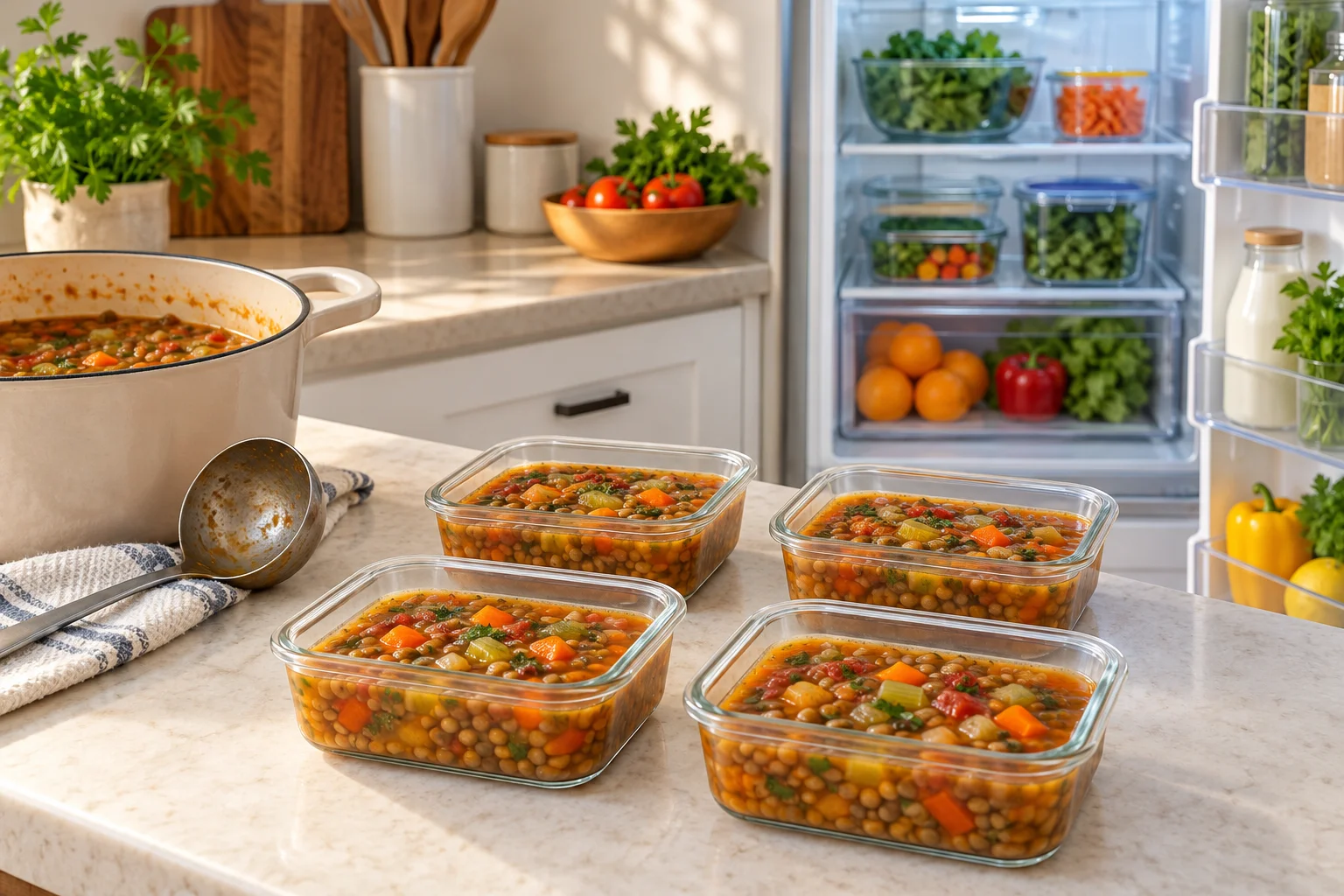
A finished slow-cooker meal can stay hot for hours, but a deep crock also holds heat long after the power is switched off. Plan where the leftovers will go before serving. The useful routine is to portion promptly, refrigerate quickly, and reheat with an appliance that heats rapidly.
1. Start the cooling clock correctly
Refrigerate perishable leftovers within two hours after cooking finishes or after removing food from verified hot holding at 140°F or above. In surroundings hotter than 90°F, the limit is one hour. These are maximum limits, not waiting periods: start portioning as soon as dinner is over. A switched-off cooker is not safe hot holding.
2. Divide the batch into shallow containers
- Wash your hands and use clean utensils and food-safe containers.
- Ladle soup, chili, gravy, or stew into several small, shallow containers instead of leaving it in one deep pot. Cut large cooked roasts into smaller portions.
- Refrigerate the portions promptly. Hot food can go directly into the refrigerator; you do not need to wait for room temperature. Leave space around containers so cold air can circulate.
- For a large soup batch, an ice-water bath can help: set the pot in ice water without letting water enter the food and stir with a clean utensil, then portion and refrigerate within the time limit.
- Cover containers and label the dish and date. Keep the refrigerator at 40°F or below.
Do not put an entire hot ceramic insert into the refrigerator. A deep mass cools slowly, and abrupt temperature changes may damage an insert; follow its manufacturer’s care instructions. Shallow portions solve the food-cooling problem without relying on the crock.
3. Decide what to refrigerate and what to freeze
Use refrigerated cooked leftovers within 3–4 days. Freeze portions you will not use in that window, ideally promptly rather than on the final day. Keep the freezer at 0°F; about 3 months is a practical quality target for many soups and stews, although continuously frozen food remains safe longer. Freezing does not make food safe after improper handling.
4. Reheat quickly and check the center
Use the stove, microwave, or conventional oven to reheat leftovers to 165°F throughout. Bring soup, sauces, and gravy to a rolling boil on the stove. Stir to heat evenly. In a microwave, cover with a vented microwave-safe cover, stir or rotate, follow standing-time instructions, and check several places with a food thermometer.
USDA does not recommend reheating refrigerated leftovers in a slow cooker. If you want to use one for a buffet, first reheat the food to 165°F elsewhere, transfer it hot to a preheated cooker, and verify it stays at least 140°F.
Common questions
Can I leave soup in the cooker overnight?
Not in a switched-off cooker. If perishable food exceeded the room-temperature limit, discard it; do not taste it to decide. Smell and appearance cannot establish safety, and reheating cannot reliably rescue mishandled food.
Can I reheat only one portion?
Yes. Take out what you need and keep the rest refrigerated. This avoids repeatedly warming and cooling the whole batch.
Should I leave containers on the counter until steam stops?
No. Divide into shallow portions and refrigerate promptly. Waiting for a large batch to cool completely can use up the safety window.
A practical dinner-to-lunch routine
Set clean containers out before dinner, portion remaining food after serving, refrigerate promptly, date each portion, and decide which portions to freeze. Try this with our lentil and sweet potato soup or white chicken chili. Review kitchen handwashing before handling containers and utensils.
Sources and review date
Checked October 12, 2026: USDA: Leftovers and Food Safety and USDA: Slow Cookers and Food Safety.