Safe advance preparation
How to Prep a Slow-Cooker Meal the Night Before
Do the knife work and measuring ahead—without leaving meat, vegetables, or dairy in unsafe conditions.
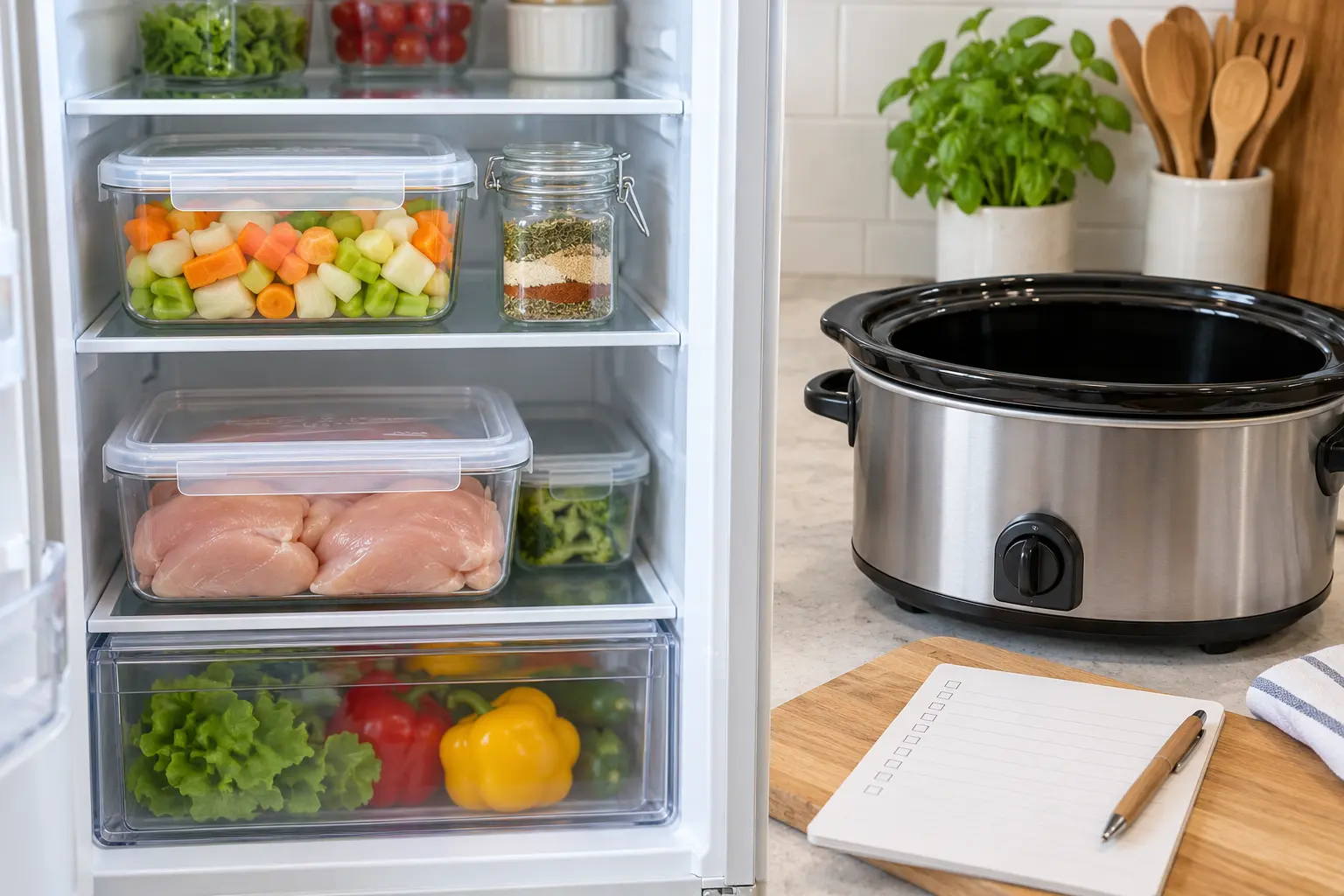
Night-before preparation should shorten the morning assembly—not begin the cooking process. USDA advises refrigerating cut meat and vegetables separately because a slow cooker can take several hours to reach a bacteria-killing temperature.
The safe night-before routine
- Read the whole recipe. Identify ingredients that begin cooking together and ingredients—such as dairy, cooked pasta, tender greens, or fresh herbs—that belong near the end.
- Wash hands and prepare produce first. Use clean tools and a clean board. Follow the site’s kitchen handwashing guide before and after handling raw meat.
- Store raw meat separately. Put thawed meat or poultry in a leakproof covered container on the lowest refrigerator shelf. Keep chopped vegetables in a different covered container. Store both at 40°F or below.
- Measure shelf-stable ingredients. Combine compatible dry herbs and spices in a small covered container. Keep broth, canned foods, and unopened packages ready nearby.
- Refrigerate perishable finishing ingredients. Keep dairy, opened sauces, and other perishables cold. Label ingredients that should not be added until the end.
- In the morning, assemble and start immediately. Transfer the refrigerated ingredients to the slow cooker, add the recipe liquid, cover, and select Low or High without delay.
Should the filled crock go in the refrigerator?
USDA’s conservative guidance is to store cut meat and vegetables separately. A cold ceramic insert may also be vulnerable to thermal shock when placed into a heating base, depending on the appliance. Follow the manufacturer’s manual; when instructions are uncertain, refrigerate ingredients in separate food-safe containers and leave the crock empty.
What not to do
- Do not use a delay timer with perishables. Raw meat, poultry, dairy, and cut produce should not sit at room temperature waiting for the cooker to switch on.
- Do not put frozen meat in the cooker. Thaw it safely first; see the frozen-meat safety guide.
- Do not partially cook meat the night before. Browning is optional, but if you start cooking meat, continue cooking it immediately rather than refrigerating it half-cooked.
- Do not rinse raw poultry. Splashing can spread contamination to the sink, counters, and nearby food.
- Do not use Warm to cook. Warm is designed to hold already-hot food. Start on Low or High.
A five-minute morning checklist
- Confirm the meat is fully thawed and ingredients stayed refrigerated.
- Place dense vegetables as the recipe directs, usually near the bottom.
- Add meat without touching ready-to-eat foods or clean handles.
- Add the measured liquid and seasonings; stay within the appliance’s fill limits.
- Wash hands, cover, select Low or High, and note the expected finish time.
Plan the finish before leaving
Choose a recipe whose timing fits your day. Many lean cuts can dry out if held too long. If the recipe requires a late dairy or pasta addition, make sure someone will be available. Never rely on color, texture, or cooking time alone for meat; use a food thermometer and the correct safe minimum temperature.
Try the routine with herb-garlic turkey tenderloin, and organize the workflow with the mise en place guide.
Sources and review date
Checked October 26, 2026: USDA: Slow Cookers and Food Safety, USDA: Turkey from Farm to Table, and USDA: Keep Food Safe.