Essential knife skill
How to properly dice tomatoes
Use a sharp blade, create a stable flat side, and match the method to the tomato. You will get neater pieces with less juice left on the cutting board.
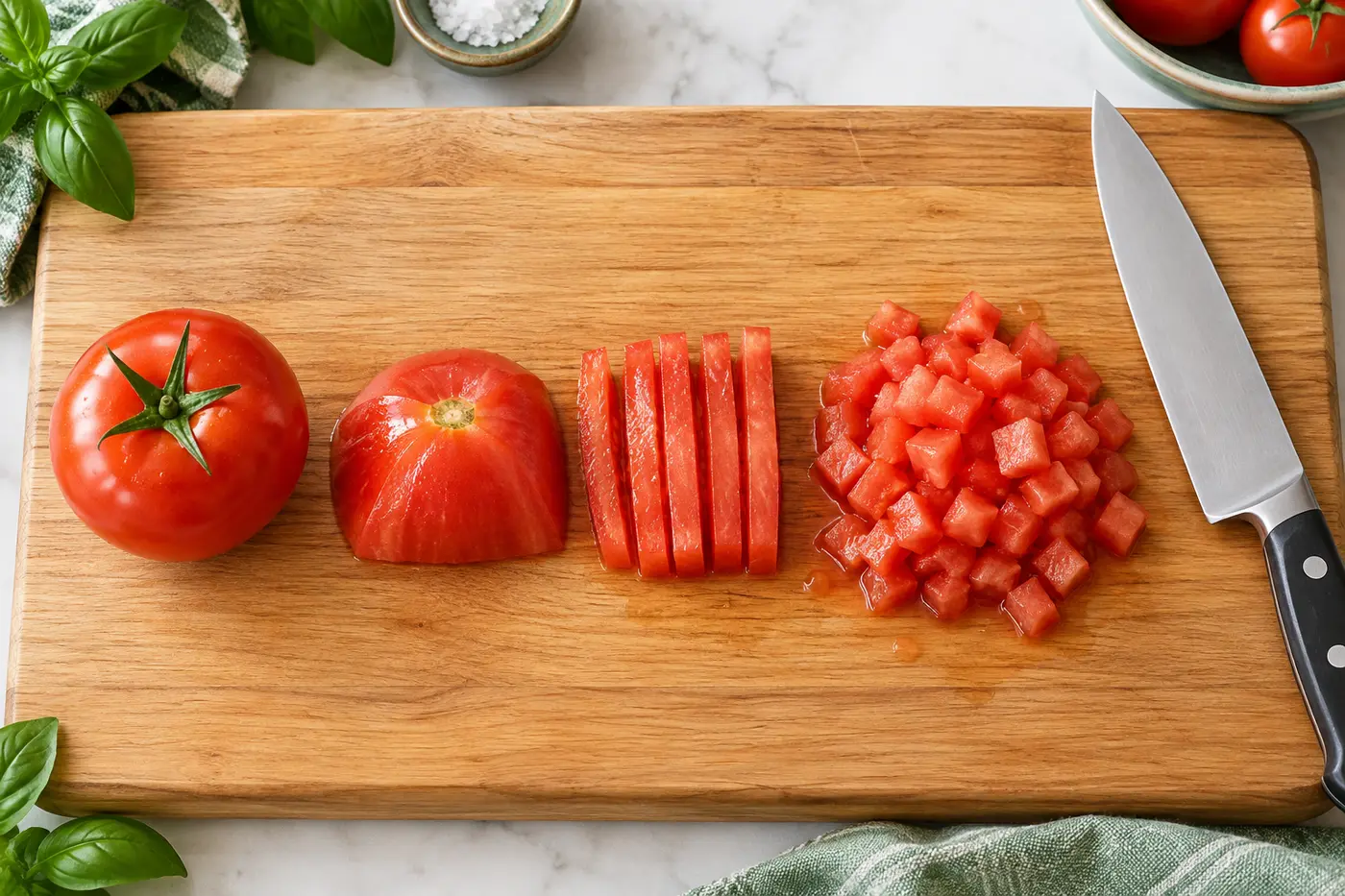
A good tomato dice starts before the first cut. Choose a firm-ripe tomato that gives slightly under gentle pressure but is not mushy. Very soft tomatoes are better suited to sauce, soup, or another preparation where tidy cubes do not matter.
Wash and set up safely
Wash your hands with soap and water for at least 20 seconds. Rinse the whole tomato under cool running water before cutting—even if you plan to peel it—while gently rubbing the surface. Dry it with a clean towel. Do not soak tomatoes or wash them with soap, detergent, or commercial produce wash.
Use a large cutting board on a dry counter. If it moves, place a damp paper towel or thin damp kitchen towel underneath. A sharp chef's knife works for firm tomatoes; a serrated utility or tomato knife can grip slick skin more easily when the fruit is especially ripe.
How to dice a round tomato
- Remove the stem and core. Pull off the stem. Use the tip of a paring knife to cut a shallow circle or cone around the firm core, then lift it out. Keep the blade pointed away from your supporting hand.
- Make a stable base. Cut the tomato in half from the stem end to the bottom. Place each half cut-side down so it cannot roll.
- Cut even slices. Hold one half with a claw grip and slice straight down at your chosen spacing. Use a gentle sawing motion instead of pressing hard.
- Make strips. Keep the slices aligned, or work with only two or three at a time. Turn them and cut strips using the same spacing.
- Crosscut into dice. Rotate the strips and cut across them once more. Keep the cuts evenly spaced and move loose pieces aside so your work area stays clear.
How to dice a Roma or plum tomato
Roma tomatoes have firmer walls and less seed gel, which makes them especially easy to dice. Quarter the tomato lengthwise, lay each wedge skin-side down, and slice away the core. If you want a drier result, run the knife along the inside of each wedge to remove the seed gel. Flatten the wedges, cut them into strips, then crosscut the strips into cubes.
Should you remove the seeds?
Usually, no. The seeds and surrounding gel are edible and flavorful. Keep them for soups, sauces, chili, and slow-cooker dishes, where the extra liquid is useful. Removing the gel is optional for salsa, bruschetta, salads, and sandwich toppings when you want a less watery result. Save what you remove for sauce or stock rather than discarding it.
Choose the right dice size
Storage and cleanup
Use diced tomatoes right away for the best texture. Otherwise, place them in a covered food-safe container and refrigerate promptly—within two hours, or within one hour when the temperature is above 90°F. For best quality, use them within 2–3 days. Discard tomatoes that show mold, an unpleasant odor, or an unusually slimy texture.
Wash the knife, board, and work surface with hot soapy water after preparation. If the same board will be used for raw meat or poultry, wash and sanitize it first to prevent cross-contamination.
Using diced tomatoes in slow-cooker recipes
Medium or large dice works well for chili, vegetable soup, braised chicken, and rustic tomato sauce. Fresh tomatoes release liquid and soften substantially during long cooking, so cut them larger when you want visible pieces. Out of season, canned diced tomatoes may deliver more reliable flavor and consistency.
Related kitchen skill
Building a soup, chili, or salsa? Continue with our step-by-step guide to properly dicing an onion.
Food-safety basis: Washing guidance follows the U.S. Food and Drug Administration's produce-safety advice. Refrigeration timing follows the USDA's food-safety steps.