Kitchen preparation
How to use mise en place for safer, easier cooking
A few organized minutes before the heat goes on can prevent missed ingredients, reduce countertop confusion, and keep raw-food tasks separated from clean finishing work.
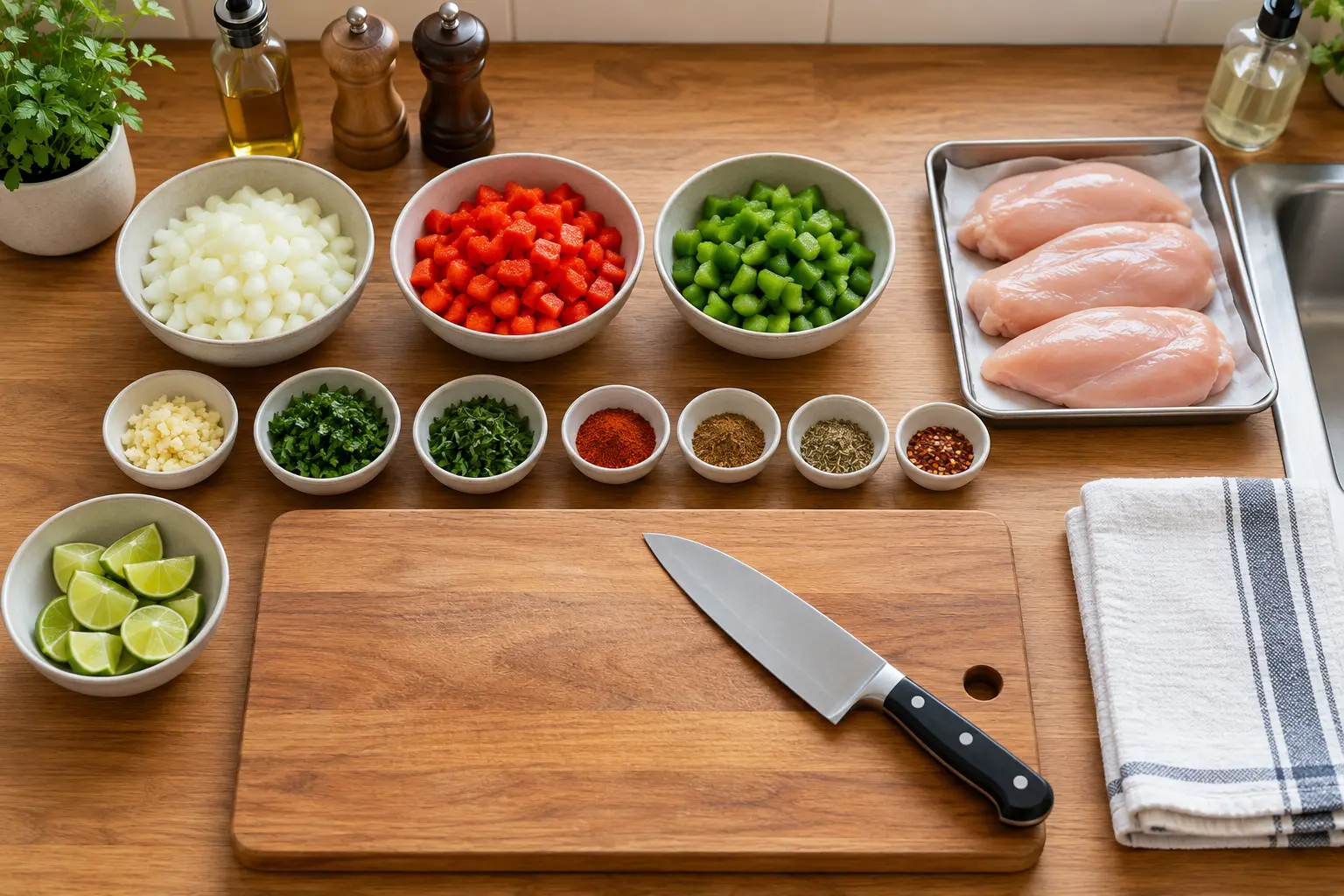
Mise en place is a French kitchen phrase commonly translated as “everything in its place.” At home, it does not require dozens of tiny bowls. It means knowing the recipe, having the needed tools ready, and arranging ingredients so each one is available when the cooking step calls for it.
Why it helps
- Fewer omissions: an empty spot or checked list makes forgotten ingredients easier to notice.
- Better timing: onions can be diced before the pan is hot, and slow-cooker ingredients can be loaded without repeated searches.
- Less cross-contamination: seasonings and clean utensils can be set aside before raw meat is opened.
- Easier cleanup: scraps, used tools, and packaging can move through a planned path instead of spreading across the counter.
A practical seven-step routine
- Read the complete recipe. Notice marinating, thawing, resting, preheating, and ingredient-temperature requirements before you begin.
- Check what you have. Confirm quantities and expiration or use-by information. For canned foods, check that containers are not leaking, bulging, or badly damaged.
- Clear, clean, and wash. Remove unrelated items, clean food-contact surfaces, and wash your hands correctly.
- Gather tools by task. Put the cutting board, knife, measuring tools, thermometer, and waste bowl where they will be used. Keep a clean plate ready for cooked food.
- Prepare clean ingredients first. Wash produce under running water as appropriate, then chop vegetables and measure ingredients that will not touch raw animal food.
- Create a raw-food zone. Open and prepare raw meat, poultry, seafood, or eggs last, on a separate board or washable tray. Keep it away from garnishes and other ready-to-eat food.
- Reset before moving on. Dispose of packaging, wash hands, wash or replace contaminated tools, clean affected surfaces, and then continue with clean controls, containers, and serving utensils.
Measure without contaminating containers
Instead of touching a spice jar after handling raw poultry, measure the needed spices into one clean bowl before opening the package. Pour seasonings from the bowl without letting it touch the meat. If you must return to a cabinet or refrigerator after handling raw food, wash and dry your hands first.
What should not sit out?
Mise en place is not permission to leave perishable ingredients at room temperature for the entire afternoon. Keep meat, poultry, seafood, eggs, dairy, cut melons, and other foods requiring refrigeration cold until close to use. As a general food-safety rule, refrigerate perishables within two hours—or within one hour when the surrounding temperature is above 90°F.
Slow-cooker setup
For slow-cooker meals, prepare vegetables and measured seasonings first. Keep thawed meat refrigerated until the cooker, liquid, and other ingredients are ready. Load the cooker, wash your hands and any contaminated surfaces, then start cooking promptly. Do not assemble a raw-meat slow-cooker meal and leave it on the counter, and do not use the warm setting to cook it.
Common mistakes
- Prepping too far ahead: quality declines and perishable food spends too long outside refrigeration.
- Using one board without a reset: raw juices can reach vegetables or garnishes that will not be cooked.
- Making a bowl for everything: extra dishes can add clutter; group ingredients that enter the recipe together when safe.
- Forgetting the finish: set aside a clean spoon, serving plate, thermometer, and toppings before raw-food work starts.
- Trusting the clock alone: mise en place improves timing, but safe doneness still requires an appropriate thermometer check.
A five-minute version
When time is short: read the instructions, clear one work zone, gather the essential tools, measure the seasonings, prepare ready-to-eat ingredients, and handle raw food last. Even this abbreviated routine makes a rushed meal easier to control.